Quick Answer
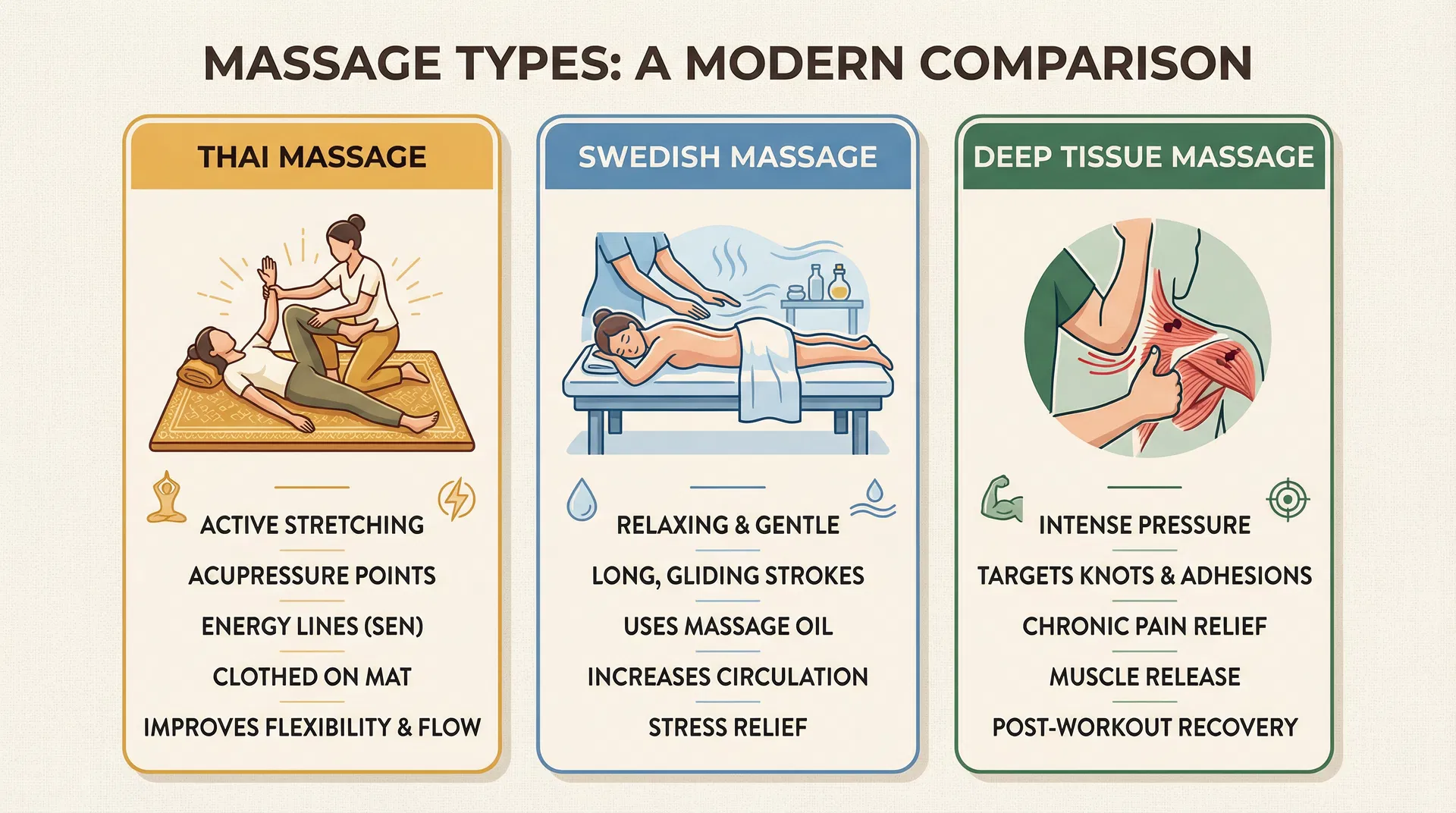
Thai massage uses acupressure and assisted stretching on a floor mat (fully clothed, no oil). Swedish massage uses long gliding strokes with oil on a table (undressed). Deep tissue targets deeper muscle layers with intense pressure. Thai massage is best for flexibility and energy; Swedish for relaxation; deep tissue for chronic pain.
Table of Contents
Understanding the Three Major Massage Styles
The world of massage therapy features dozens of modalities, but three styles dominate globally: Thai massage, Swedish massage, and deep tissue massage. Each has distinct origins, techniques, and therapeutic goals. Understanding their differences helps you choose the right treatment and, for aspiring therapists, the right specialization.
Related: What Is Thai Massage?
Side-by-Side Comparison
Thai massage: performed on floor mat, fully clothed, no oil, uses acupressure + stretching, 2-hour sessions, focuses on energy lines. Swedish massage: performed on table, undressed with draping, uses oil/lotion, long gliding strokes (effleurage), 60-90 minutes, focuses on relaxation. Deep tissue: performed on table, undressed, uses oil, slow deep strokes targeting deeper muscle layers, 60-90 minutes, focuses on chronic pain relief.
Related: Thai Massage Techniques
Which Style Is Best for Your Goals?
For flexibility and range of motion: Thai massage. For stress relief and relaxation: Swedish massage. For chronic muscle pain: deep tissue. For athletic recovery: Thai massage or sports massage. For general wellness: any style works. For energy and vitality: Thai massage. For post-injury rehabilitation: deep tissue with medical guidance.
Related: Health Benefits of Thai Massage
Frequently Asked Questions
Sources & References
Ready to Learn Thai Massage?
Join our government-approved Thai massage school in Bangkok. Professional certification, English instruction, and visa support for international students.